| Books of the Bible, the |
Create Date: 22-Apr-2020 |
|
Old and New Testament, the Apocrypha |
Last updated: 25-Sep-2026 |
| And the Ethiopian Bible |
|
| A
A
A
help
|
|
Sections
1. Expositional Consistency
It has been noted by at least one prominent Biblical Scholar that the way to lead people
away from the truth of the scriptures is to present other ways to supposedly
reach God. The world has many religions that present themselves as being
the truth and also have tenants that are admirable and worthy but the only
religion in the world that states that mankind is incapable of reaching God by
actions of their own is Christianity.
When the great Patriarchs gathered
to evaluate a document and see if it inspired and worthy of being in the canon,
then we know that God participated, guided and guarded the process. The
proof:
- There are 66 books of over 40 authors are harmonized with the same
terms, idioms, and double patterns.
- There are encryptions
known by the ancient Rabbis, with more being found by computer algorithms,
that are verification.
| Isaiah 28:10 |
For it is precept
on precept, precept on precept; line on line, line on line; here a
little, there a little. |
| Isaiah 28:13 |
Therefore the word of Yahweh will be to them
precept on precept, precept on precept;
line on line, line on line; here a little, there a little; that they may
go, fall backward, be broken, be snared, and be taken. |
Additionally, it has to be noted that the history recorded in the Books
of the Bible have continuously been proved to correct. Skeptics,
critics and those against the Word of God have unsuccessfully tried many
attempts to discredit and find problems with the Books of the Bible so
the approach often used is to take scriptures out of context, and/or
site there is no proof of historical peoples and cities existing.
Fortunately, archeology
has been steadily finding more and more corroboration that verifies the
history recorded in the Bible. See the topic on
Archeological Writings
to compare the Bible against other ancient writing that include other
religious works.
Notes:
- The Tanakh is the Hebrew name for the Jewish Scriptural Books
- The Bible is the Christian's scriptural books that contains the Old and
New Testament.
- The Apocrypha are fictional historical writings venerated by Roman
Catholics:
(a) To somehow and unsuccessfully prove their is a
place that the Roman Catholic calls Purgatory.
(b) To contradict the
Old Testament and New Testament with prayers for the dead will be
honored by God which they will not as read in Hebrews 9:27.
(c) To allowing the
Roman Catholic Clergy to be able to sell Indulgences to forgive sins for
someone alive or dead that negates payment on the
Cross by Jesus Christ.
(d) Are clearly gross exaggerations and contain contradictions in
the Apocrypha.
(e) Directly contradicts the completed work of
Jesus Christ on the
Cross for the restitution
payment for sins of a person who accepts through God's Grace only.
God initiates the Salvation
Process, and our works in life (not death) have the benefits in our
Earthly life and then permanent
rewards in Heaven.Notes on the
blasphemy Indulgence
selling by the Roman Catholic Clergy:
(1) Were sold with the promise that even if a person is in
lower Sheol (Hell), awaiting the Great
White Thrown of Judgment, that the purchase of an Indulgence will free
them from Hell and allow them to go Purgatory and then eventually go to
Heaven.
(2) Were sold with the promise that the person alive or dead would
receive more
rewards in Heaven.
(3) Several websites from Roman Catholic sources will state indulgences are
no longer sold, was a myth (deception), or were replaced by penance.
Restitution is applicable for fixing sinful actions, but never penance.
It is this author's opinion to not even own a copy, as the Apocrypha
violates Deuteronomy 4:2 and Revelation 22:18-19.
| Deuteronomy 4:2 |
Ye shall not add unto the word which I
command you, neither shall ye diminish from it, that ye may keep the
commandments of Jehovah your God which I command you. |
| Hebrews 9:25-28 |
25
Nor did He enter heaven to
offer Himself again and again, as the high priest enters the Most
Holy Place every year with blood that is not his own.
26 Otherwise, Christ would have had to suffer
repeatedly since the foundation of the world. But now He has
appeared once for all at the end of the ages to do away with sin by
the sacrifice of Himself. 27
Just as man is appointed to die once, and after that to face
judgment, 28 so also Christ was
offered once to bear the sins of many; and He will appear a second
time, not to bear sin, but to bring salvation to those who eagerly
await Him. |
| Revelation 22:18-19 |
18 I testify unto every man that heareth
the words of the prophecy of this book, If any man shall add unto
them, God shall add unto him the plagues which are written in this
book: 19 and if any man shall take away
from the words of the book of this prophecy, God shall take away his
part from the tree of life, and out of the holy city, which are
written in this book. |
- There are subtle differences between Tanakh and Christian Bible with the
same content.
(a) Samuel is two books in the Christian Faith.
(b) Kings is two books in the Christian Faith.
(c) Chronicles is two books in the Christian Faith.
(d) Chagai and Haggai are the same book.
(e) Song of Songs is the same book as Song of Solomon.
(f) Ezra and Nehemiah are split into two books in the Christian Faith.
Note that the Roman Catholic Bible that many deliberate changes that are
blasphemy against God.
2. The Books of the Entire Bible
The Apocrypha is NOT canonical and NOT inspired scripture. It is on a
historical writing and is listed in this topic because or Roman Catholic
incorrect reverence.
|
|
|
Tanakh |
|
|
|
|
|
Christian |
|
|
|
|
|
|
Hebrew Bible |
Category |
Contains |
|
|
|
Bible |
|
|
|
|
1 |
1 |
Genesis |
Torah |
|
|
|
1 |
Genesis |
|
|
|
|
2 |
2 |
Exodus |
Torah |
|
|
|
2 |
Exodus |
|
|
|
|
3 |
3 |
Leviticus |
Torah |
|
|
|
3 |
Leviticus |
|
|
|
|
4 |
4 |
Numbers |
Torah |
|
|
|
4 |
Numbers |
|
|
|
|
5 |
5 |
Deuteronomy |
Torah |
|
|
|
5 |
Deuteronomy |
|
|
|
|
6 |
6 |
Joshua |
Prophets |
|
|
|
6 |
Joshua |
|
|
|
|
7 |
7 |
Judges |
Prophets |
|
|
|
7 |
Judges |
|
|
|
|
8 |
8 |
Samuel |
Prophets |
|
|
|
8 |
Ruth |
|
|
|
|
9 |
9 |
Kings |
Prophets |
|
|
|
9 |
1 Samuel |
|
|
|
|
10 |
10 |
Isaiah |
Prophets |
|
|
|
10 |
2 Samuel |
|
|
|
|
11 |
11 |
Jeremiah |
Prophets |
|
|
|
11 |
1 Kings |
|
|
|
|
12 |
12 |
Ezekiel |
Prophets |
|
|
|
12 |
2 Kings |
|
|
|
|
13 |
|
The Twelve |
Prophets |
|
|
|
13 |
1 Chronicles |
|
|
|
|
|
13 |
1 |
Minor Prophets |
Hoshea |
|
|
14 |
2 Chronicles |
|
|
|
|
|
14 |
2 |
Minor Prophets |
Joel |
|
|
15 |
Ezra |
|
|
|
|
|
15 |
3 |
Minor Prophets |
Amos |
|
|
16 |
Nehemiah |
|
|
|
|
|
16 |
4 |
Minor Prophets |
Obadiah |
|
|
17 |
Esther |
|
|
|
|
|
17 |
5 |
Minor Prophets |
Jonah |
|
|
18 |
Job |
|
|
|
|
|
18 |
6 |
Minor Prophets |
Micah |
|
|
19 |
Psalms |
|
|
|
|
|
19 |
7 |
Minor Prophets |
Nahum |
|
|
20 |
Proverbs |
|
|
|
|
|
20 |
8 |
Minor Prophets |
Habakkuk |
|
|
21 |
Ecclesiastes |
|
|
|
|
|
21 |
9 |
Minor Prophets |
Zephaniah |
|
|
22 |
Song of Solomon |
|
|
|
|
|
22 |
10 |
Minor Prophets |
Chagai |
|
|
23 |
Isaiah |
|
|
|
|
|
23 |
11 |
Minor Prophets |
Zechariah |
|
|
24 |
Jeremiah |
|
|
|
|
|
24 |
12 |
Minor Prophets |
Malachi |
|
|
25 |
Lamentations |
|
|
|
|
14 |
25 |
Psalms |
Writings |
|
|
|
26 |
Ezekiel |
|
|
|
|
15 |
26 |
Proverbs |
Writings |
|
|
|
27 |
Daniel |
|
|
|
|
16 |
27 |
Job |
Writings |
|
|
|
28 |
Hosea |
|
|
|
|
17 |
28 |
Song of Songs |
Writings |
|
|
|
29 |
Joel |
|
|
|
|
18 |
29 |
Ruth |
Writings |
|
|
|
30 |
Amos |
|
|
|
|
19 |
30 |
Lamentations |
Writings |
|
|
|
31 |
Obadiah |
|
|
|
|
20 |
31 |
Ecclesiastes |
Writings |
|
|
|
32 |
Jonah |
|
|
|
|
21 |
32 |
Esther |
Writings |
|
|
|
33 |
Micah |
|
|
|
|
22 |
33 |
Daniel |
Writings |
|
|
|
34 |
Nahum |
|
|
|
|
23 |
34 |
Ezra & Nehemiah |
Writings |
|
|
|
35 |
Habakkuk |
|
|
|
|
24 |
35 |
Chronicles |
Writings |
|
|
|
36 |
Zephaniah |
|
|
|
| |
|
|
|
|
|
|
37 |
Haggai |
|
|
|
| |
|
|
|
|
|
|
38 |
Zechariah |
|
|
|
| |
|
|
|
|
|
|
39 |
Malachi |
|
|
|
| |
|
|
|
|
|
1 |
40 |
Matthew |
New Testament Books |
| |
|
|
|
|
|
2 |
41 |
Mark |
|
|
|
| |
|
|
|
|
|
3 |
42 |
Luke |
|
|
|
| |
|
|
|
|
|
4 |
43 |
John |
|
|
|
| |
|
|
|
|
|
5 |
44 |
Acts |
|
|
|
| |
|
|
|
|
|
6 |
45 |
Romans |
|
|
|
| |
|
|
|
|
|
7 |
46 |
1 Corinthians |
|
|
|
| |
|
|
|
|
|
8 |
47 |
2 Corinthians |
|
|
|
| |
|
|
|
|
|
9 |
48 |
Galatians |
|
|
|
| |
|
|
|
|
|
10 |
49 |
Ephesians |
|
|
|
| |
|
|
|
|
|
11 |
50 |
Philippians |
|
|
|
| |
|
|
|
|
|
12 |
51 |
Colossians |
|
|
|
| |
|
|
|
|
|
13 |
52 |
1 Thessalonians |
|
|
|
| |
|
|
|
|
|
14 |
53 |
2 Thessalonians |
|
|
|
| |
|
|
|
|
|
15 |
54 |
1 Timothy |
|
|
|
| |
|
|
|
|
|
16 |
55 |
2 Timothy |
|
|
|
| |
|
|
|
|
|
17 |
56 |
Titus |
|
|
|
| |
|
|
|
|
|
18 |
57 |
Philemon |
|
|
|
| |
|
|
|
|
|
19 |
58 |
Hebrews |
|
|
|
| |
|
|
|
|
|
20 |
59 |
James |
|
|
|
| |
|
|
|
|
|
21 |
60 |
1 Peter |
|
|
|
| |
|
|
|
|
|
21 |
61 |
2 Peter |
|
|
|
| |
|
|
|
|
|
21 |
62 |
1 John |
|
|
|
| |
|
|
|
|
|
21 |
63 |
2 John |
|
|
|
| |
|
|
|
|
|
21 |
64 |
3 John |
|
|
|
| |
|
|
|
|
|
21 |
65 |
Jude |
|
|
|
| |
|
|
|
|
|
21 |
66 |
Revelation |
|
|
|
3. Other Books Mentioned in the Scriptures
| The scriptures have several mentions of other Books.
We do not have copies of these
books, albeit a proposed copy of the Book of Jashar which most
Biblical Scholars state is contrived. These are the five major book
references in the scriptures that we do not have copies:
- The Books were
opened in Revelation 20:12, where one of them is the Book of Life.
(Notice that Books is plural, more than one.)
- The
Book of Jashar in Joshua 10:13 and 2 Samuel 1:18.
- The
Book of Wars of the Lord in Numbers 21:14 - 15.
- The
Books on Seven Divisions in Joshua 18:9.
- The
Book with Seven Seals in Revelation 5:1.
|
4. The Apocrypha Books are NOT the Word of God
God consistently uses thousands of idioms, patterns,
encryptions,
double references,
foreshadowing,
rituals, and so much more with
exponential consistency that
spans the Old and New Testament by
forty authors in sixty-six books written that are separated by
centuries to authenticate the scriptures.The Apocrypha books can be used for grammatical purposes of the period of time,
and in some cases historical research on possible corroboration with other
historical sources.
Depending upon what Christian belief and denominating, there are sixteen
books that may actually be considered nineteen with the "Additions to Daniel"
containing different subareas.
The following is an excerpt from the "How
the Apocryphal Books Contradict Scripture PDF" that list the
four different Christian
Denominations with different accepted books.
- Roman Catholicism - Does not accept:
(a) Prayer of Manasseh
(b) 3 Maccabees, and
(c)4 Maccabees
- Greek Orthodox - Does not accept:
(a) 2 Esdras
- Russian Orthodox - Does not accept:
(a) 4 Maccabees
- Coptic - Does not accept:
(a) 4 Maccabees
|
The full list of Apocrypha writings:
| |
Name |
Notes |
| 1 |
1 Esdras |
The events of Jewish Exiles returning from Babylon captivity. |
| 2 |
2 Esdras (Apocalypse of Ezra) |
Visions from Ezra and some prophecies of the End times. |
| 3 |
Tobit |
Israelite Tobit and son Tobias with the angel Raphel on family
values. |
| 4 |
Judith |
Judith rescues the city she lives in by beheading the Assyrian
General Holofernes. |
| 5 |
Ester |
About prayer, providence, and fasting. |
| 6 |
Wisdom of Solomon |
Seek wisdom and righteousness and the consequences to the righteous
and the wicked. |
| 7 |
Sirach (Ecclesiasticus) |
Proverbs and teachings |
| 8 |
Baruch |
Attributed to Jeremiah's scribe named Baruch that gives some
emotional details on Babylonian exile. |
| 9 |
Epistle of Jeremiah |
Considered part of book of Baruch with emphasis on staying away from
idolatry. |
| 10 |
Additions to Daniel |
Account of Shadrach, Meshach, and Abednego in the fiery furnace |
| |
Prayer of Azariah and Song of the Three Holy Children |
Azariah (Abednego) is in the fiery furnace and prays by confessing
sins of Israel and three men are saved |
| |
Susanna |
The trials of Susanna that accused of adultery when she was innocent
and divine intervention. |
| |
Bel and the Dragon |
Concerns Bel the idol that was thought to eat daily offerings, a
living dragon is worshipped as god, and Daniel is thorn into the lion's
den a second time. |
| 11 |
Prayer of Manasseh |
A prayer from King Manasseh |
| 12 |
Psalm 151 |
Found in Septuagint Bible, Eastern Orthodox Bible. Not found
in Hebrew or Protestant cannon. It is about David's you, selection
by God and the victory of Goliath. |
| 13 |
1 Maccabees |
Describes the Israel revolt against the Seleucid Empire and then the
Hasmonean Dynasty. |
| 14 |
2 Maccabees |
Continuation of details of "1 Maccabees" |
| 15 |
3 Maccabees |
Persecution of Israel under Pharaoh Ptolemy IV of Egypt |
| 16 |
4 Maccabees |
Philosophical argumentum and martyrdom stories |
The Apocrypha is not the Word of God for many reasons:
- The Apocrypha was rejected by the Rabbis before and after Jesus Christ,
so it was not something that the Roman Catholics insist that Protestants are
rejecting to be aversive to Catholicism.
- The books of the Apocrypha are NOT designed and given by the Holy Spirit
for many reasons that include.
(a) Contradict the scriptures from other books,
(b) Do NOT contain any heptadic structures,
double occurrences, and
patterns that the ancient rabbis and church leaders knew, and
(c) Verified in recent history that they do not contain Encryptions
which is why they were rejected and proof that they have no relevance.
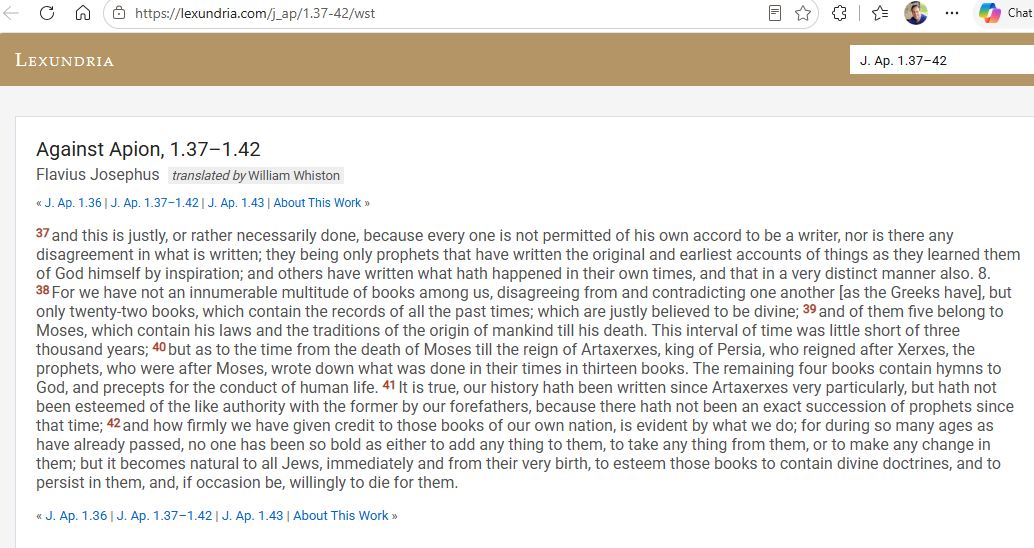
- Flavius Josephus wrote that Israel does not recognize the books.
Screen capture from:
Flavius
Josephus, Against Apion 1.37-1.42
- There are no references by the
Hellenistic
Jewish Philosopher Philo of any of the verses in Apocrypha the books.
-
Justin, who was murdered for the Christian Faith in the year 163AD, does
not have any references to the Apocrypha books and verses.
- There are hundreds of references and inferences to the Old Testament
scriptures, but not one of the Apocrypha book's verses.
- In the Fourth Century, the Bishop of Caesarea Eusebius states there is no
other "sacred" books other than the one already known that do not include
the Apocrypha books and verses.
- At the council of Nice, with 318 Bishops and numerous other Christians
from churches all over the Roman Empire, the Apocrypha is not acknowledged
as part of the cannon.
-
Athanasius, in 340AD, also states that the only books of the scriptures
are the ones known, and NOT the Apocrypha.
- The Roman Catholic Church did NOT recognize the books of the Apocrypha
as inspired until the Council of Trent 1546 for reasons to justify their
traditions and the ability to sell indulgences (widely in use in the 13th
century) for sins because of the Catholic teaching that most, not all,
people have to undergo punishment for sins before entering Heaven which negates Jesus Christ's
payment for sins.
(a) Jerome stated in 400AD that the books were only good for possibly
establishing Christine doctrine, which in one possible reference for the
Council of 1546 to approve them as part of the Roman Catholic cannon, while
ignoring too many other inconsistencies in the message, no
patterns of
encryptions that are
throughout the Old and New Testament, and also taking away from God's glory
to the writer of the books.
(b) The Apocrypha has references to purgatory and prayers for the Dead.
(c) The Apocrypha has references to a person must do works in their life to have
Salvation, which is against the completed work of
Jesus Christ at the Crucifixion
that is our
Salvation. Our works contribute to our
rewards in Heaven only!
| 2 Maccabees 12:44–46 |
Praying for the dead with sin offerings and explicit reference
to purification before a person's resurrection (clearly blasphemy as
sins were paid for by Jesus Christ!)
44 (For if he had not hoped that they that
were slain should rise again, it would have seemed superfluous and
vain to pray for the dead,) 45 And
because he considered that they who had fallen asleep with
godliness, had great grace laid up for them. 46
It is therefore a holy and wholesome thought
to pray for the dead, that
they may be loosed from sins. |
- The word "apkruptw", Greek for Apocrypha, which gave the name for the
books means to hide or conceal. This gives the connotation of
something missing.
- In the Apocrypha book of Esdras over emphasizes his own lineage and the phrase
"Thus saith the Lord" where the writer is giving himself the same authority
as Moses.
- In the Apocrypha book of Tobit, there is an interview with an Angel, which is
actually blaspheme against God's authority, honor, and use as of
Angels as
messengers, protectors (guardian), and warriors only.
- One of many great website links is this link:
Why the Apocrypha is not Canonical Scripture – Purely Presbyterian
- A sample list of verses from the Apocrypha are scripturally wrong and
blasphemy against Jesus Christ:
| |
Apocryapha reference |
Contradicts Scriptures |
| 1 |
Tobit 12:9 and 14:1 - Justification by Works and not
Faith alone |
1 John 2:2, Ephesians 2:8, 1 John 1:9 |
| 2 |
2 Maccabees 12:40-45 - Purgatory required for
cleansing of Soul |
Luke 23:43, Philippians 1:22-24 |
| 3 |
Baruch 3:4 and 2 Maccabees 15:13-4 - Dead can pray
for living |
Ecclesiastes 9:5 |
| 4 |
Wisdom 8:19-20 - Souls existed before they united
with the body |
Zechariah 12:1 |
| 5 |
Tobit 1:3-5, 14:1-2 and Judith 1:1 - All inaccurate
historical dates and names |
|
5. Ethiopian Bible Books Rejected by Many Denominations
The Ethiopian Bible contains many books that are not recognized by the
Eastern Orthodox Christians Denominations, the Roman Catholics, and most
Protestant Denominations.
Old Testament:
| |
Name |
Notes |
| 1 |
1 Enoch |
An Apocalyptic books written only in Ge'ez |
| 2 |
Jubilees |
Meaning "little Genesis" which is another account of the period of
time from Genesis to Exodus |
| 3 |
1 Meqabyan |
An unique different Ethiopian narrative of 1 Maccabees |
| 4 |
2 Meqabyan |
Exhortations |
| 5 |
3 Meqabyan |
Philosophical |
| 6 |
Ezra Sutu'el |
An Apocalyptic book that is theorized to be another version of the
Book of Ezra chapter 4 |
| 7 |
Tagsas |
Ethiopian wisdom |
New Testament:
| |
Name |
Notes |
| 1 |
Sinodos 1 |
|
| 2 |
Sinodos II |
|
| 3 |
Sinodos III |
|
| 4 |
Sinodos IV |
|
| 5 |
Book of the Covenant 1 |
|
| 6 |
Book of the Covenant 2 |
|
| 7 |
Ethiopic Clement |
|
| 8 |
Ethiopic Didascalia |
|
What to read next?
What is
Salvation? Is it is possible to
lose Salvation? We have
eternal life.
Evolution is not real. When a Christian
suffers
is there benefits from it.
Rewards in heaven. Do we
Tithe?
What does the
3rd Commandment tell us? What is
Grace
and Mercy? Is there a place of
unending punishment and
exile form God?